
Blog
BIAB vs Acrylic Nails: What Is the Difference?
Both promise stronger nails, but they are built from different chemistry and behave differently in the chair and on your hands. Here is how soak-off BIAB compares with mixed-and-sculpted acrylic.
Book Now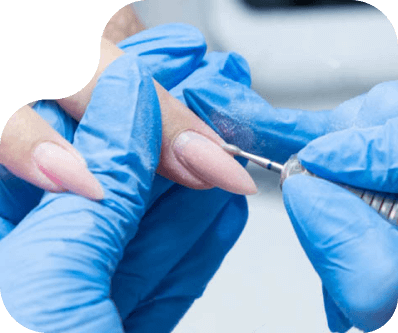
The short answer
BIAB and acrylic are both used to strengthen or extend the nail, and both have been around long enough that most clients have tried one or the other at some point. The difference starts with what is actually in the product. BIAB, short for builder in a bottle, is a soak-off gel that comes pre-mixed and cures under a UV or LED lamp. Acrylic is a two-part system, a liquid monomer combined with a powder polymer, mixed by the technician into a bead and shaped onto the nail before it sets hard in the air.
That difference in chemistry changes almost everything downstream, how it smells in the salon, how flexible it feels once cured, how it comes off and what it is best used for. Neither is automatically the better choice. A lot depends on what your nails need right now, whether you want length, and how you feel about the removal process.
Two Different Systems
BIAB: the soak-off gel
BIAB goes on straight from the bottle, thicker than a gel polish but still workable with a brush, and cures under a lamp in stages. Once cured it has some give, so it flexes slightly with the natural nail rather than fighting it. There is no mixing and no strong chemical smell, which is one reason it feels like a quieter, gentler appointment.
Acrylic: the sculpted system
Acrylic is mixed on the spot, a liquid monomer dipped with a brush into a powder polymer to form a bead, then shaped onto the nail or a form before it self-cures in the air rather than under a lamp. That mixing step is what gives acrylic its distinctive smell and lets a skilled technician sculpt a precise shape or significant length, since the bead can be built and worked before it sets.
How They Compare
Application and smell
BIAB is applied and cured under a lamp with no mixing involved, so there is little odour in the salon. Acrylic is mixed from a liquid monomer, which carries a sharper chemical smell during application. Neither smell lingers once the set is finished and cured.
Flexibility and feel
BIAB has some flex once cured, so it moves slightly with the nail and rarely feels heavy. Acrylic sets rigid and stays that way, which gives it structural strength but means it does not absorb impact the way a softer gel does.
Length and extensions
This is where acrylic has the edge. Because the mixed bead can be sculpted and built up before it sets, acrylic is well suited to longer extensions over a tip or form. BIAB is primarily an overlay for the natural nail, and while a technician can add modest length in some cases, it is not the go-to product for a dramatic extension.
Removal
BIAB is a soak-off gel, so it comes off with acetone and light filing to break the seal. Acrylic needs to be filed down first to reduce its thickness, then soaked, since a thick bead will not soften all the way through on its own. Both should be removed by a technician rather than picked or peeled off at home.
Nail health over time
Neither product damages a nail on its own. The risk with either comes from repeated cycles of aggressive filing during removal, which thins the nail plate over months. BIAB infills tend to involve less removal each visit since the existing layer is often maintained rather than stripped back, while acrylic is more commonly removed and reapplied in full, so the removal step happens more often.
Wear time
Both typically run 3 to 4 weeks before an infill is needed, though this depends on how fast your nails grow and how the set is maintained. Neither product is meaningfully more durable than the other at this interval, so wear time alone is rarely the deciding factor.
Which One Should You Book?
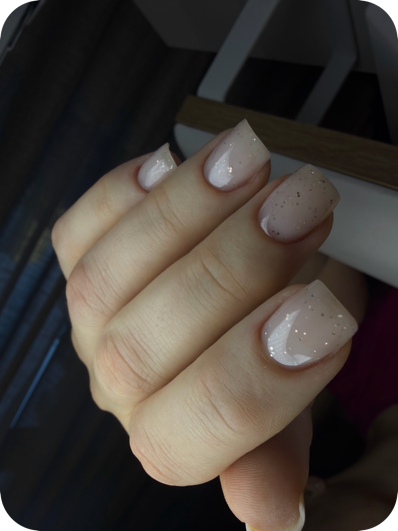
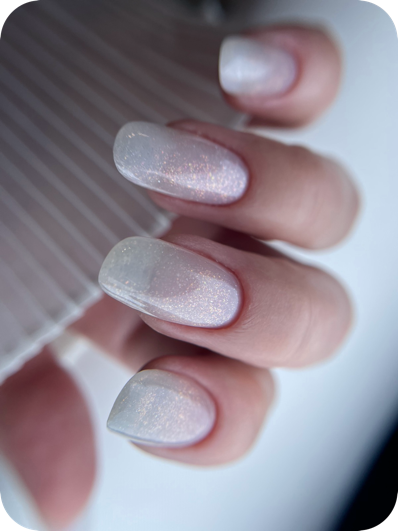
- →You want your own nail shape supported, not extended. BIAB is the usual pick. It reinforces what you already have with a lighter, more flexible feel.
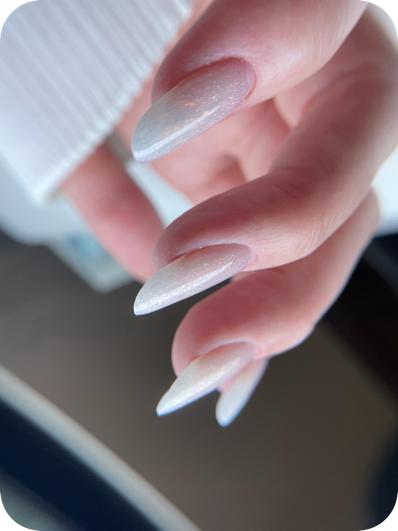
- →You want noticeable extra length. Acrylic is built for this. A mixed bead can be sculpted over a form in a way a soak-off gel cannot match.
- →You are sensitive to strong smells in the salon. BIAB has little odour since there is no mixing step. Acrylic application has a sharper chemical smell that some clients prefer to avoid.
- →Your nails have felt thin after past acrylic sets. BIAB is a gentler option to rebuild strength, especially paired with a dry cuticle prep and a longer stretch between full removals.
- →You are not sure. Book a consultation. A technician will look at your nail condition and what you actually want from the set before recommending one over the other.
What We See in South Melbourne
At About U Nail Studio, BIAB is delivered as part of the Gel Manicure service and accounts for most of what we do, since the great majority of clients are after stronger, better wearing nails at their own length rather than added length. We do not currently offer acrylic extensions, so if you are set on a sculpted acrylic length, a specialist acrylic studio will serve you better than a BIAB-focused salon.
Where we can help is clients coming out of acrylic who want a break from the smell, the filing, or the weight, and want to move to something lighter while their natural nail recovers. A technician will check the nail condition first, since nails that have worn acrylic for a long stretch sometimes need a short rest or extra strengthening before BIAB goes on.
Common Questions
Is BIAB stronger than acrylic?
Neither is simply stronger. Acrylic is more rigid and holds significant length well, while BIAB is strong but flexes with the nail instead of resisting it. For everyday knocks, that flexibility often means less impact reaches the natural nail underneath.
Does BIAB smell as strong as acrylic?
No. Acrylic is mixed from a liquid monomer and a powder polymer, and that liquid carries a distinct chemical smell during application. BIAB is a pre-mixed gel that goes straight from the bottle onto the nail and cures under a lamp, so there is no mixing smell at all.
Can BIAB do nail extensions like acrylic?
Acrylic is the traditional choice for longer extensions because the mixture sets very hard and can be sculpted over a form. BIAB is mainly an overlay for the natural nail and is better suited to short to medium lengths, though a technician can add a small amount of extra length with tips in some cases.
Which is cheaper, BIAB or acrylic?
Pricing varies by salon, but acrylic has traditionally sat at the lower end because the raw materials cost less and application is faster once a technician is experienced. BIAB often costs a little more, partly because the soak-off removal and infill process takes longer chair time.
Can I switch from acrylic to BIAB?
Yes, once the acrylic has been properly removed. A technician will check the condition of the natural nail first, since nails that have worn acrylic for a long time may be thinner and need a short break or extra strengthening before BIAB goes on.
Not sure which one is right for you
About U Nail Studio in South Melbourne assesses your nails before recommending BIAB. Book with a trained specialist and get a coating matched to what your nails actually need.