
Blog
BIAB Removal: How to Take It Off Safely
Most nail damage blamed on BIAB actually happens during removal, not application. Here is how a proper soak-off works, why peeling causes the problems people associate with BIAB, and what a removal appointment in Melbourne should look like.
Book Now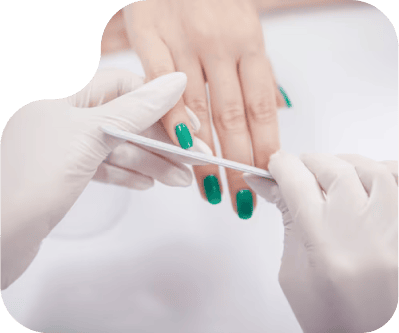
The short answer
BIAB removal is a two step process, filing followed by an acetone soak, and it should never involve peeling or prying the product off with a tool. Because BIAB is a soak-off gel, acetone will break it down once the surface has been thinned out enough to let it in. Skip that filing step, or get impatient and pick at a lifted edge instead, and you pull away layers of the natural nail along with the product.
This matters because most of what people describe as BIAB damaging their nails is really removal damage. The product bonds well, which is exactly why it lasts 3 to 4 weeks, and that same bond means it resists being ripped off in one go. Handled patiently, removal leaves the nail close to how it looked before the set went on.
What Happens During a Salon Removal
1. Filing back the top layer
A technician files off the shine and thins the bulk of the BIAB, working down close to the natural nail without touching it. This step does most of the actual work. It is also the step most home attempts rush or skip, which is why acetone alone often struggles to shift a full set.
2. Acetone soak
Once the product is thin enough, acetone soaked pads are wrapped around each nail, usually in foil or clips, for around 10 to 15 minutes. The remaining BIAB softens and starts to lift on its own rather than needing to be forced.
3. Gentle scrape and buff
Any softened residue is scraped away with light pressure, never a hard scratch across the nail bed. A quick buff evens out the surface, and cuticle oil goes on last to counter the drying effect of the acetone.
If something will not budge
The rule that separates a safe removal from a damaging one is simple. If product is not lifting freely, it goes back in acetone rather than being pried at. A slower removal is always the better trade against thinned or flaking nails afterwards.
Why Home Removal Often Goes Wrong
BIAB can be removed at home, and plenty of people do it without issue. The problems tend to come from two shortcuts. The first is skipping the filing step, since without it acetone has almost nothing to work through and the soak either fails or has to run far longer than it should. The second, more damaging shortcut is giving up on the soak early and picking at an edge instead, which pulls surface layers of the nail off with the product.
Fine emery boards and a steady hand can manage the filing stage for most people. The part that catches people out is knowing when the product is genuinely soft enough to come away on its own, versus still bonded and being forced. That judgement is really the whole reason a trained technician gets a cleaner result, not any special product they have access to.
Removal Is Not the Same as an Infill
Most BIAB appointments are not full removals at all, and it is worth knowing the difference before you book.
- →An infill keeps the bulk of the existing BIAB in place and only works on the regrowth area near the cuticle. Nothing is soaked off. This is the routine appointment most clients book every 3 to 4 weeks.
- →A full removal takes everything back to the bare nail using the filing and acetone process above. It is booked when you are stopping BIAB for a while, switching to a different product, or the existing set has lifted too badly to infill over.
- →A removal before a fresh set is sometimes needed if product has been on for a long stretch or was applied elsewhere and the technician wants a clean base to start from.
Caring for Your Nails After Removal
Acetone is drying, so the nail and surrounding skin usually feel a little rough straight after a removal. Cuticle oil worked in a couple of times a day and a rich hand cream at night make a noticeable difference within a few days. If you are taking a break before your next set, keep nails trimmed short rather than letting a thin, unreinforced edge catch and tear.
If the nail feels unusually flexible or thin straight after removal, that is worth mentioning to your technician rather than layering straight into a new set. A short rest, or a lighter product for one cycle, gives the nail a chance to firm back up before it takes on another builder layer.
Common Questions
Can I remove BIAB at home?
You can, but it is easy to get wrong. BIAB has to be filed back before acetone can reach it, and most home attempts skip that step and try to peel or pry the product off instead, which lifts layers of the natural nail with it. A salon removal uses controlled filing and a proper acetone soak, so the risk of thinning the nail is much lower.
Does removing BIAB hurt your nails?
The product itself does not damage the nail. The damage almost always comes from how it is taken off, specifically peeling, picking or forcing it before it has softened. A slow, filed and soaked removal leaves the nail plate close to how it was before application.
How long does BIAB removal take?
A full removal usually takes 15 to 25 minutes on top of whatever service follows it. That covers filing back the top layer, an acetone soak of around 10 to 15 minutes, and a final buff to clear any residue.
Do I need to fully remove BIAB every time?
No. Most appointments are infills, where only the regrowth area is worked on and the bulk of the product stays in place. A full removal is only needed if you are stopping BIAB altogether, switching products, or the product has lifted badly and needs to come off completely.
What should I do after a BIAB removal?
Cuticle oil and a rich hand cream for the first few days help with the dryness acetone leaves behind. If you are having a break between sets, keep nails trimmed short and moisturised, and avoid jumping straight into a fresh coat of gel polish without giving the nail a short rest if it feels thin or flexible.
Ready for a proper BIAB removal
About U Nail Studio in South Melbourne removes BIAB the slow way, filed and soaked, never picked or forced. Book a removal or a fresh set with a trained specialist.